
The perfect betting app will be different for each individual. By knowing what the key functions are, sports fans can find the right one more easily.
Brick-and-mortar bookmakers were once the only place to make a bet. Slowly, this was replaced by digital sites, which could be accessed through browsers.
Today, most global betting traffic comes through smartphone apps, moving through palm-sized devices that fit in the pocket.
No longer just places to make a bet, they are sources of information with real-time statistics and entertainment. Yet getting the right one is a very personal journey.
The Core Pillars of a Betting App

Most major operators will have spent a lot of time and research on their apps, getting the fundamental core pillars correct.
As soon as you finish a Betway app download, for example, you will find the basics laid out right in front of you, making them easy to access and understand. These are UX, live betting, and cashing out.
User experience (UX) is the journey a customer makes as they travel around a website or app. Bad UX may take them down dead ends and make finding key pieces of information hard.
The app may glitch, crash, or buttons and controls may be out of size, meaning they are hard to click when using your mobile. All of this simply makes bettors go elsewhere.
When dealing with shifting odds, this becomes even more crucial. Users don’t want to click and accidentally make bets or total up the wrong odds. Thus, user experience and design are paramount.
Live betting comes next. This is the ability to make a wager as a game is ongoing. Usually, these odds will be central and will be clearly marked to show they apply to a game in progress. They can add an extra layer of excitement to proceedings.
Lastly is the cash-out feature. A user should be able to see their balance, any credit they have accrued, and be able to cash this out with a tap or two on the screen.
What Is Working Behind the Scenes on a Betting App?
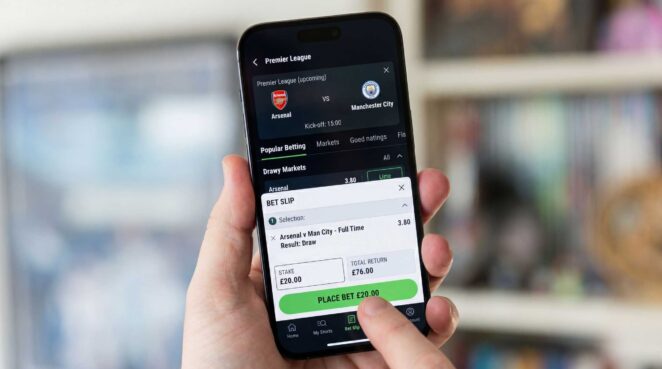
Behind the scenes, some key pieces of technology are driving these apps. Real-time data feeds are the first.
They will integrate with sports data providers through application programming interfaces, which will fetch real-time scores, player statistics, and adjust odds in real time.
Of course, none of this functionality is possible without payment gateways. They are the bridge between the consumer, who is placing money on sports events, and the platform itself.
Conversely, the platform must be able to pay out as soon as they make a request. This can be done through open banking, digital withdrawal mechanisms, and well-known digital wallets.
All of this is relayed to consumers through push notifications. As a person has the phone in the palm of their hand, it is a great marketing tool.
Constant changes can be fed to them, including score changes and odds adjustments. They can even be used to provide personalized betting offers.
Safety and Security

With so much financial information and personal details moving from bettors to the platform, it is imperative that a betting app is fully secure. This is done via SSL encryption and other methods like biometric logins.
Geolocation technology is also a key factor. The only online casinos and sports betting apps you should use will be licensed in your region.
Go offshore, and you risk using services that have lax security or are just outright unfair. Geolocation technology ensures that only people in the licensed jurisdiction can use the service, and eliminates those from other states or countries through the use of IP address logging.
Lastly, not all safety comes from the software, and there are also ethical responsibilities a gambling company must have to look after its customers.
These take the form of safer gambling initiatives and tools to help those who may start having issues with their betting.
Limits are the most common of these. They allow players to set a threshold on how much they can deposit in a day or week.
This helps with budget management and stops people from overspending. Similar to this are time-outs and self-exclusion, which will ban people from using the system for a given time period.
Some apps will even use AI monitoring to actively seek out problem gambling patterns. They may look for people depositing large amounts when they usually only make small deposits, or gambling at odd times or on niche markets. All of this can signal problem gambling, and platforms will then contact customers to discuss this.
The future of apps is uncertain. As technology improves, browsers seem to be getting even more adept at providing these services, and the concept of the app may vanish.
This is exacerbated when you consider the gambling restrictions put on app stores, and the high fees charged for placing them there.
For now, however, many people prefer an app for their ease of use, security, and ability to provide top-class betting entertainment.